

Overcoming Information Overload
Struggles with executive functioning are common in those with learning difficulties and attention issues, particularly ADHD. It can cause huge frustration, but the good news is executive functioning skills can be improved.
Ben is a bright 14-year-old, but his homework is full of silly errors that cost him marks, and sometimes he even forgets to do it. He frequently leaves his sports gear and clarinet at home, and a week’s worth of crumpled maths worksheets line the bottom of his bag. He lost the signed permission slip for the school museum trip and wasn’t allowed to go.
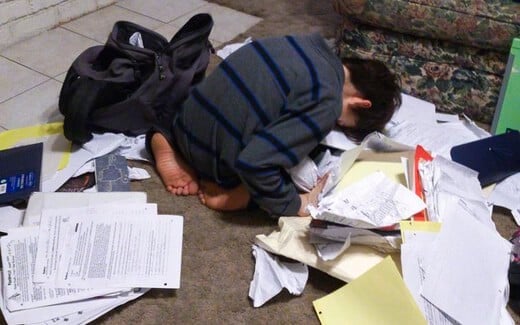
While Ben is good at maths, he typically launches into exercises without reading the instructions properly and answers the question incorrectly. Beginning research for his social studies assignment, he struggles to know where to start and gets distracted surfing the net. At 10.30pm his dad discovers him gaming with a friend; he’s barely begun the essay that’s due tomorrow and suddenly the panic sets in.
Ben isn’t a bad kid, and he’s not intentionally goofing off. He just has problems with executive functioning (EF) – the process that governs organisation, focus and self management – and it has a big impact on all aspects of his learning.
What is executive functioning (EF)?
Executive functions are a set of mental skills that help us plan, organise, remember, identify, prioritise and begin a task, then remain focused on that activity so we can complete it successfully. They help us to work through the steps systematically to manage a task without being told what to do at each stage. But the brain mechanisms that operate executive functioning are some of the slowest to develop and don’t fully mature until our late teens or early twenties.
Executive dysfunction – the signs
Children and teens with executive functioning issues often struggle to stay organised and complete their schoolwork. They may seem forgetful or distracted, have trouble approaching tasks systematically, lose track of time, and become easily frustrated.
Often these kids can be impulsive or impatient. Rather than take the time to read instructions or directions associated with a particular task, they rush into it, making incorrect assumptions about what they’re supposed to do. As a result, they might end up multiplying when they should be dividing, and get the entire exercise wrong.
Difficulties with planning and prioritising are hallmarks of executive dysfunction, as is the inability to actually get started on a task. You might think your child is being lazy or procrastinating, but they could in fact be so overwhelmed that they do nothing. This is particularly the case with large, multi-stage projects, where students need to work out what’s important and what should be tackled first. They also may struggle to break a task down into more manageable chunks, and have trouble identifying the main idea. Lacking strategies to self monitor and check if they’re still on track is also typical with EF deficits. And finding ways to organise their ideas and information is another challenge.
When their approach doesn’t pan out or they realise they’ve made a mistake, they may lack the ability to snap back and keep going or change course towards a more workable solution. This is because they lack the mental flexibility to do this and simply end up frustrated and discouraged instead.
You might think your child is being lazy or procrastinating, but they could in fact be so overwhelmed that they do nothing.

Boosting executive function skills: Suggestions for how to help your child/teen be more organised.
Set up systems
Show your child how to be organised and systematic. Have them make their school lunch the night before, organise their school bag with items they need for the following day, pack their sports gear and lay out their school uniform.Create an after-school structure so they know exactly what to do the moment they get home. Use a step-by-step checklist e.g. clear out your schoolbag (remove notices, empty your lunchbox, put dirty sports gear in the laundry); have a snack and 30 minutes’ downtime; check your homework tasks – what’s due tomorrow? Make a start on it. Ask for help if you need it. With these tasks out of the way, they can enjoy some screen time or hang out with friends.
Use calendars and planners
Set up a family (and/or individual) white board. Assign each child a colour and write in regular activities, reminders, one-off practices/events, etc.
Encourage the use of a diary or daily planner where they can record instructions from teachers (perhaps your child’s teacher could note down important reminders for them), assignment due dates, sports/music events, permission slips, shared lunches etc.
If lists aren’t helpful, create a more visual reminder using images and graphics as quick cues your child can see at a glance.
Schoolwork success
When starting an assignment, get your child to read over it first, highlighting important directions and key pieces of information. A mind map could help them plan out the tasks required so each can be approached individually. Breaking an essay or research project into smaller chunks will make it less daunting and easier to manage. Help your child draw up a checklist of what needs to be done. Encourage them to read/check over their work once it’s finished to ensure it makes sense and nothing is missing.
Help older children sort their notes and work for each subject into colour-coded folders or exercise books to make everything easy to find for exam preparation.
Keep cool
Parenting a child with executive functioning issues can be very frustrating – and it’s certainly frustrating for the child/teen themselves. It’s tempting to get angry and yell, but anxiety and stress are counterproductive, particularly to someone who’s already overwhelmed by the situation. Changing your approach can help diffuse the stress you all feel and make your child feel supported and more confident.
A wealth of information on executive functioning can be found at www.understood.org
Here’s some advice on how to organise a home for someone with poor executive function.