
Finding the Perfect Fit
Many neurodivergent people don’t find their feet until they reach the workplace. Jordan Kanon was diagnosed with dyslexia at 7, and later with autism and ADHD at 20. He shares his difficult journey through school, what he liked about university and why he’s now thriving as a product developer.
“I despised school and was a difficult student in class. I was years behind in reading but apart from English, found everything easy, so I never applied myself. Everyone just thought I was trouble, apart from a teacher in Year 11 who ‘got me’. She actually challenged me to try so, for the first time, I did.
“I struggled with the social aspect of school and sitting in a classroom when I knew I didn’t have to try to pass. I view my time as valuable, so I was just wasting time locked in a classroom for six hours a day. I preferred uni – it felt easy because it’s all free form and I could do the work whenever I liked. I completed assignments really quickly, but I couldn’t do exams. Fortunately, there were none and I graduated with a BSc in Creative Technology in 2023.
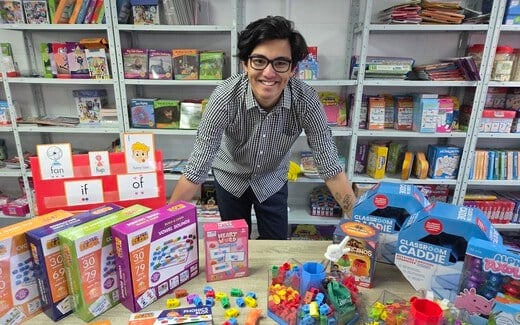
“In my second year at uni, I began an internship with Junior Learning – a company that makes multi-sensory educational resources backed by the latest research in cognitive psychology. A lot of their products are used by children with learning difficulties. I’m now their product developer. It’s the perfect fit for me. I was mad on Lego as a kid. My special interest and hobby is now my day job and I love it. I design all the 3D models or rework wooden models for plastic manufacture. I have a very 3D mind. The best way to describe it is I view the world like a master builder from the Lego movie. From one look at something, I can understand the mechanics, working and design of it. I then rework or design it in my head to improve it.
Find good people who understand your quirks and accept you.
“At work they let me wear headphones and they’re flexible with my hours. Some days I’m up at 4am and come into work; some days I leave at 1pm – I just can’t do it anymore. They are very accommodating. I’m given a lot of freedom to explore ideas. Some turn into products, some don’t.
“With dyslexia, I still find it hard to read standalone words. I didn’t know about phonics until I started work at Junior Learning. I wished I got taught this in school so I could sound out and spell words. I can only describe it as being asked to tell you what colours are in the rainbow but not being taught the name of the colours.
“My advice to other neurodivergent young people struggling to figure out their way is to find good people who understand your quirks and accept you. Good friends and colleagues can make you go a long way in life.”