
Leaning Into My Imagination
New Zealand-based author John Lazenby reflects on the not-so-distant past when his illiteracy was viewed as a character defect that could be rectified by regular beatings. Then one enlightened teacher changed everything.
“At the age of 12, I had a burning desire to be an author. I didn’t allow the fact that I struggled to read or write – and certainly couldn’t hope to follow a paperback from cover to cover – to deter me. Only I could get so far ahead of myself that I believed I could have a book published.
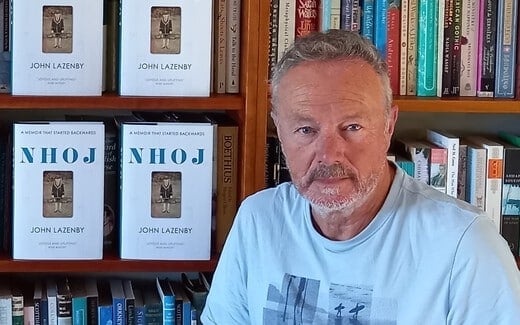
“Curiously, I had already fallen under the spell of bookshops. What struck me most about them was the leathery, inky smell – the scent of crisp new pages and fresh print, of books waiting to be opened. I loved it so much that when the other boys bunked off boarding school to play the slot machines, I sneaked into the local bookshop and browsed the shelves, in the hope that some of the magic might rub off on me. I’d select a book, weigh it in my hands and visualise my name on the cover, not that I’d have known the meaning of words like ‘visualise’.
“My parents had packed me off to boarding school aged seven (an unspeakably grim place called Hildersham House in southeast England), having been expelled from my previous school for being ‘unteachable’. I could write only one word, NHOJ – my name, spelled backwards – and had no idea how to knot a tie or do up my shoelaces. It was hardly a secret that I was the only boy in the school who was illiterate; it was there for all to see during chapel. The sight of me ‘tornadoing’ through the pages of my prayer book in search of the hymn number was a familiar, distracting part of the service. On one occasion, the headmaster marched down the aisle, grabbed my book and rotated it 180 degrees before thrusting it back in my hand, the right way up. I hadn’t even realised I was trying to read upside down.
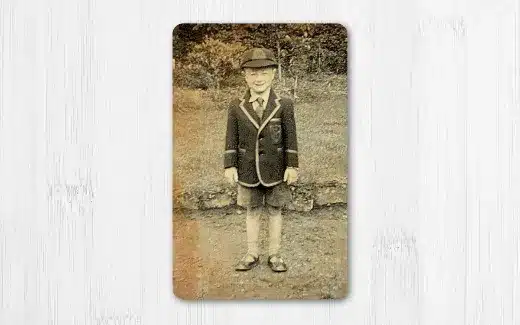
“Who knows what might have happened to me had it not been for a young teacher who serendipitously entered my life at Hildersham House. Dorothy Shepherd was not long out of teachers’ college but was a specialist in childhood dyslexia – a rarity in the 1960s – and was able to diagnose me when everyone else had missed the signs.
I hadn’t even realised I was trying to read upside down.
“In an age when illiteracy was viewed as a character defect that could be rectified by regular beatings, Miss Shepherd’s presence was nothing short of miraculous. She was a pioneer, way ahead of her time. Before her intervention, my sole method of communication involved drawing intensely dramatic pictures – usually invoking some form of battle scene. This was all I could provide when asked to write an essay in class or a letter home to my parents. However, by placing her hand over mine and guiding it across the page, Miss Shepherd gradually untangled the alphabet for me, eventually transforming each letter into a shape I could at last recognise.
“More than that, she taught me that there was nothing to fear about being different – “You might even find it an advantage one day; you wait and see” – and encouraged me to lean into my imagination, to reframe it as a powerful tool. “Keep seeing the pictures,” she urged.
“A lifetime later, I could still hear her voice when I took another challenging leap: at the age of 51, I finally realised my unlikely childhood dream when I wrote my first book, Test of Time, a sports history title. By then, I had been a sports journalist for three decades, first on provincial newspapers before graduating to nationals, where I kept my dyslexia a closely guarded secret. A further three books followed, culminating with NHOJ: A Memoir That Started Backwards.
“It turns out that Miss Shepherd was right – one day, I would embrace the vivid imagination that lay beneath, and intertwined with, my dyslexia. My one regret is that Miss Shepherd moved to South Africa when I was 10, and I never got to say goodbye. What I wouldn’t give today to thank her for setting my life in motion, to tell her how grateful I am, or that I’m still seeing the pictures.”
John Lazenby spent more than 40 years chronicling the tales of others. But for much of his life, he closely guarded his secret struggle with dyslexia. Now it’s all laid bare in his poignant memoir “NHOJ – A Memoir That Started Backwards”. This is the story of his progress from a seven-year-old who could write only one word – his own name, spelt backwards – to a journalist and author who built a career around the very words that had initially been so elusive.