
• Home
  • Contact Us
  • Services
    • Our Services
    • Diagnostic assessment
    • One-on-one tuition
    • Teacher Credentials
    • Training
    • Financial Support
    • Membership Support
  • Stories
  • News & Events
    • News
    • Events
  • About Us
    • About SPELD NZ
    • Our Vision & Values
    • Our History
    • Our Approach
    • Our People
    • Our Supporters
    • Annual Reports
  • Moodle Login
New Zealand’s leading provider of support for children and adults with dyslexia and other specific learning disabilities. New Zealand’s leading provider of support for children and adults with dyslexia and other specific learning disabilities. New Zealand’s leading provider of support for children and adults with dyslexia and other specific learning disabilities. New Zealand’s leading provider of support for children and adults with dyslexia and other specific learning disabilities.
  • Home
  • Contact Us
  • Services
    • Our Services
    • Diagnostic assessment
    • One-on-one tuition
    • Teacher Credentials
    • Training
    • Financial Support
    • Membership Support
  • Stories
  • News & Events
    • News
    • Events
  • About Us
    • About SPELD NZ
    • Our Vision & Values
    • Our History
    • Our Approach
    • Our People
    • Our Supporters
    • Annual Reports
  • Moodle Login
Membership Application  
Information Pack  
DONATE
  • Children
    • Services for Children
    • Key Indicators for Children
    • SLD Definitions
  • Adults
    • Services for Adults
    • Key Indicators for Adults
    • SLD Definitions
  • Educators
  • Employers

Professor Pamela Snow on The Science of Learning in Practice

Home » Our Services » Training » Learning Capsules » Professor Pamela Snow on The Science of Learning in Practice

Executive Function, Cognitive Load, and Supporting Students with Specific Learning Disabilities

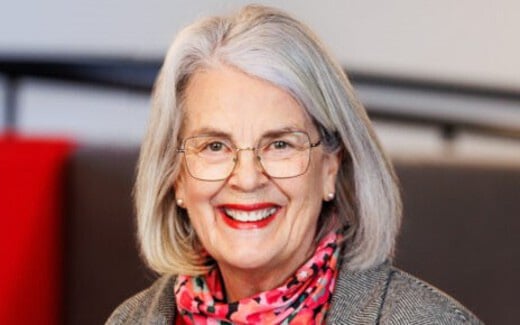
Join Distinguished Professor Pamela Snow in this two-part recorded webinar series that bridges research and practice. She explores how evidence from cognitive science can inform effective teaching for all learners, with a particular focus on targeted interventions for students with specific learning difficulties in both school and private settings.

"An excellent two sessions, so informative and so helpful to distinguish pseudoscience from evidence based practice."
"Thank you very much for another informative session with lots of extra links to further our understanding. Will definitely change my teaching and instruction delivery."
"An incredible presentation."

Learning Outcomes


Part 1: Gain a deeper understanding of executive functions in the
immature brain and cognitive load theory


  • Human executive functions (attention, concentration, self-regulation, etc.) addressing their late maturation and the education/intervention implications of this;
  • The relationship between specific learning difficulties and executive function;
  • Cognitive load theory as a valuable framework for understanding human information processing and constraints on learning associated with working memory limitations;
  • Key pedagogical approaches aligned with cognitive load theory, including used worked examples, scaffolding, daily review, retrieval practice, spaced and interleaved retrieval and the gradual release of responsibility;
  • The relationship between specific learning difficulties and working memory;
  • Implications for homework / self-directed practice.

Part 2: Gain evidence-based insights into supporting struggling students in the
contemporary science of learning context


  • Examine the term “science of learning”;
  • Importance of following pedagogy guided by science of learning for students with SLD;
  • Response to intervention framework as it applies to practitioners delivering small-group (Tier 2) and one-to-one (Tier 3) intervention;
  • Contemporary approaches to neurodiversity terminology and classification, and pseudoscientific approaches and neuromyths are flagged, given the extent to which these are marketed to parents and schools.

Ideal for


  • Educators (teachers, learning support, SENCO and LSCs)
  • Intervention specialists
  • Tutors
  • Anyone else who would like more an in-depth understanding of executive function and targeted interventions reflecting the Science of Learning.

Delivery method

A three-hour recorded webinar (in two parts) presented by Professor Pamela Snow. Slide notes and links to recommended resources are provided.

Want to know more?

Pamela Snow is a Distinguished Professor (Cognitive Psychology) in the School of Education at La Trobe University in Victoria, Australia. Professor Snow is a Fellow & Life Member, Speech Pathology Australia and Co-Director, Science of Language and Reading (SOLAR) Lab.  In 2019 Professor Snow was a keynote speaker at SPELD NZ’s Lifting Literacy conference. Find out more about Professor Snow here and read her hugely popular blogs here

Contact

Email: nationaloffice@speld.org.nz 

Phone: 028 2552 5822

Cost

$50 SPELD NZ Professional Members (SPELD NZ Assessors, Teachers and Kaiārahi)
(To enrol and access the discount, use your regular Moodle login and click the Webinars/Kōwae Ako tile)

$70 for all others

Enrolment

All others, please go via the enrolment portal below.  It will ask you to create your own login to our Moodle platform if you do not already have one. You can then select this Learning Capsule/Kōwae Ako. Once you have made payment via credit or debit card, you will be given immediate seven-day access to the recordings and slide notes.

ENROL NOW

Learning Capsules

  • Phonemic & Phonological Awareness – Updated 2025
  • Navigating Neurodiversity at Primary School
  • Professor Pamela Snow on The Science of Learning in Practice
  • Powerful Strategies to Boost Writing Skills
  • What Do I Do After Phonics? Advanced spelling instruction and morphology
  • Syntax as the ‘Phonics’ of Writing: It’s as fundamental as that!
  • Oral Language Competence and Transition to Literacy
  • The Power of Etymology and Morphology
  • Literacy in First World, English-Speaking Nations
  • Dyscalculia
  • Top Ten Resources to Help Your Child at Home
  • Navigating Neurodiversity in Early Childhood
  • Navigating Neurodiversity at Secondary School
  • Phonics
  • Mastering the Paragraph to Clarify Thinking
SPELD Homepage
  • Contact Us
  • Stories
  • News & Events
  • About Us
  • Sitemap
Services for:
  • Children
  • Adults
  • Educators
  • Employers
Information Pack 
Membership Application 
Charities number: CC46602
Privacy statement
Navigating Neurodiversity at Primary School
Phonics