

Seeing the World Differently
Researcher, anthropologist and entrepreneur Dr Ruth Gibbons comes from what she describes as a proudly neurodivergent family. “At one time I identified four generations,” she says. “And it’s always been a place of difference. It’s never been a place of disability.”
This perspective has shaped Ruth’s work and research throughout her career.
Dyslexia as a subculture
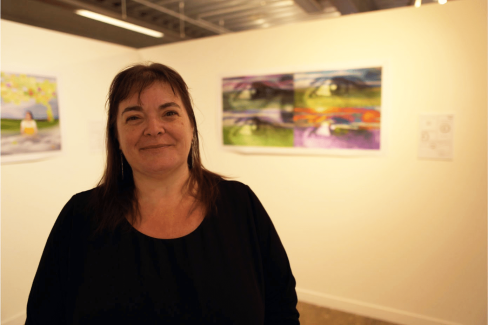
Ruth completed a PhD exploring the everyday experience of dyslexia from a dyslexic perspective. Rather than relying solely on traditional academic methods, she incorporated art, film, animation and sculpture into her thesis.
Her goal was to challenge preconceived ideas about dyslexia and expand how it can be understood.
As an anthropologist, Ruth views dyslexia not simply as a learning difficulty but as a different way of being in the world – almost like a subculture.
“There are practices and rituals and things that people who are dyslexic do that all dyslexics do, so it’s normal,” she explains.
What gets missed is the complexity – the creative, layered, non-linear thinking
Beyond words
Ruth lectured for nine years at Massey University and now creates online courses for neurodivergent students, alongside running the ideas company Ponderables, which has a focus on neurodiversity.
While plenty gets written about the negatives, Ruth emphasises there is much to celebrate in the creative and original worldviews of neurodivergent minds.
“What gets missed is the complexity – the creative, layered, non-linear thinking that so many neurodivergent students bring to the table,” she says.
Ruth relates this to her own experience. “I never got past level four spelling at school,” she says. “During my undergraduate studies, I taught myself to spell by turning off the automatic spell check and typing the corrections myself.”
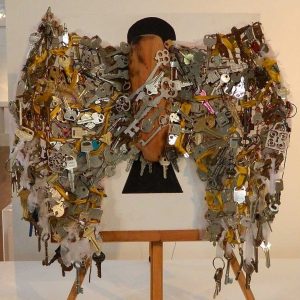
Rather than focusing on these negatives, Ruth says she learned that systems are often designed in ways that do not value dyslexic thinking – but there are other ways of doing things.
“Words alone cannot always capture the dyslexic experience, which is why art played an important role in my research. It helped explore ideas that participants found difficult to express through language. I was one of the first PhDs at that time in anthropology to include arts and a written thesis. It’s now becoming a lot more common.”
For more on Ruth Gibbons, check out her website and Ruth’s exhibition using art to tell stories from a dyslexic perspective This included the piece above Exploring Dyslexic Life as a Gathering of Openings.
Here are some of Ruth’s tips and hacks for tertiary students.
Our thanks to contributor Wendy Colville